

Last Updated: October 25, 2026
Quick Summary
To verify used Toyota transmission quality, inspect the fluid level and condition for red or pink color without burnt smell, check the transmission case for cracks and leaks, run a diagnostic scan for trouble codes, and confirm the transmission ID tag matches your vehicle's requirements. A road test revealing smooth gear shifts without slipping or harsh engagement indicates a safer purchase.
- Check transmission fluid color should be red or pink, not dark brown or black, and smell normal without burnt odor
- Inspect the transmission case for cracks, leaks, and verify the ID tag matches your specific vehicle model and year
- Run a diagnostic scan to reveal trouble codes related to solenoids or pressure sensors that indicate internal problems
- Ask the seller about service history, mileage on the original vehicle, and whether the transmission has been tested or rebuilt
- Perform a road test to confirm smooth gear shifts in all positions without slipping, harshness, or unusual noises
Table of Contents
- Why Transmission Verification Matters Before Purchase
- Common Signs of a Bad Transmission to Watch For
- Toyota Transmission Identification and Compatibility
- Step-by-Step Used Transmission Inspection Checklist
- Verifying Service Records and Repair History
- Key Questions to Ask When Buying a Used Transmission
- Making Your Purchase Decision at Bayou Garage Supply
- Frequently Asked Questions
Why Transmission Verification Matters Before Purchase
Buying a used transmission is a big decision. A faulty unit can fail weeks after installation, leaving you stranded and out hundreds of dollars.
The stakes are real. A transmission replacement isn't a quick fix. It requires labor costs, downtime, and frustration. That's why you need to verify used Toyota transmission quality before you buy, it isn't optional, it's essential.
This guide walks you through exactly how to inspect a used transmission, spot red flags, and make a confident purchase. We'll cover the physical inspection, the diagnostic checks, and the questions you need to ask before handing over your money.
Common Signs of a Bad Transmission to Watch For
Not every used transmission shows obvious damage. Some fail silently until they're installed. Others display clear warning signs if you know what to look for. Understanding these symptoms helps you reject problem units before they become your problem.
Delayed or Harsh Gear Shifts
Delayed shifting is one of the most common transmission problems. When you accelerate, the transmission should engage smoothly. If there's a noticeable lag, a pause before the engine responds, that's a red flag.
Harsh shifts feel like a jolt. The transmission clunks or bangs when changing gears instead of transitioning smoothly. This often points to worn internal components or low fluid pressure.
Both issues suggest internal wear. A transmission that shifts harshly or delays engagement will likely fail sooner than a unit that shifts smoothly. During a road test, pay close attention to how the transmission responds at different speeds and throttle positions.
Slipping Gears and Loss of Power
Gear slipping is serious. It happens when the transmission loses power delivery mid-gear. The engine RPM climbs but the vehicle doesn't accelerate proportionally. You might feel the tachometer spike while the car lurches forward inconsistently.
This indicates worn clutch plates, damaged bands, or internal seal failure. Slipping transmissions don't recover on their own, they get worse. A transmission that slips under load will continue to slip and eventually fail.
Loss of power is related but distinct. The vehicle hesitates to accelerate or struggles to maintain steady speed. This can signal low transmission fluid, worn hydraulic components, or internal damage affecting pressure delivery.
Unusual Noises, Shuddering, and Burning Smells
Listen for grinding, whining, or clunking sounds. A healthy transmission is nearly silent. Grinding suggests internal metal-on-metal contact. Whining often points to pump wear or low fluid.
Shuddering feels like vibration or stuttering during acceleration or gear changes. It's often caused by worn engine mounts, but transmission shudder is more rhythmic and occurs specifically during shifts.
Burning smells are a critical warning. Transmission fluid has a distinct odor. If it smells burnt, acrid or chemical, the fluid has overheated or degraded.
Toyota Transmission Identification and Compatibility
Not all Toyota transmissions are interchangeable. Installing the wrong transmission wastes money and creates installation headaches. Before you buy, confirm the transmission matches your vehicle.
Locating the Transmission ID Tag
Every Toyota transmission has an identification tag. It's usually bolted to the transmission case itself. The tag contains critical information: the transmission model, serial number, and build date.
The tag's location varies by transmission type. On most four-speed and five-speed units, it's on the driver's side of the transmission housing. On six-speed automatics, check the top or rear of the case.
Write down the complete identification number. Cross-reference it against your vehicle's documentation. Toyota parts catalogs list which transmissions fit specific model years and engine sizes. A mismatch means the transmission won't bolt up correctly or will cause compatibility issues.
Matching Transmission Type to Your Vehicle
Toyota uses different transmission families across model years. A four-speed automatic from a 1998 Tacoma won't fit a 2010 Tacoma. A CVT transmission designed for a Corolla won't work in a Tundra.
Check your owner's manual or the vehicle's door jamb label for the transmission type and model year. Then verify the used transmission matches exactly. Some Toyota transmissions share similar part numbers across years, but subtle differences can prevent proper installation.
When in doubt, contact a Toyota dealer with your vehicle's VIN. They can confirm which transmission your truck or SUV requires. This verification takes minutes and prevents costly mistakes.
Step-by-Step Used Transmission Inspection Checklist
A thorough inspection catches problems before you buy. This checklist covers the essential checks every used transmission should pass.
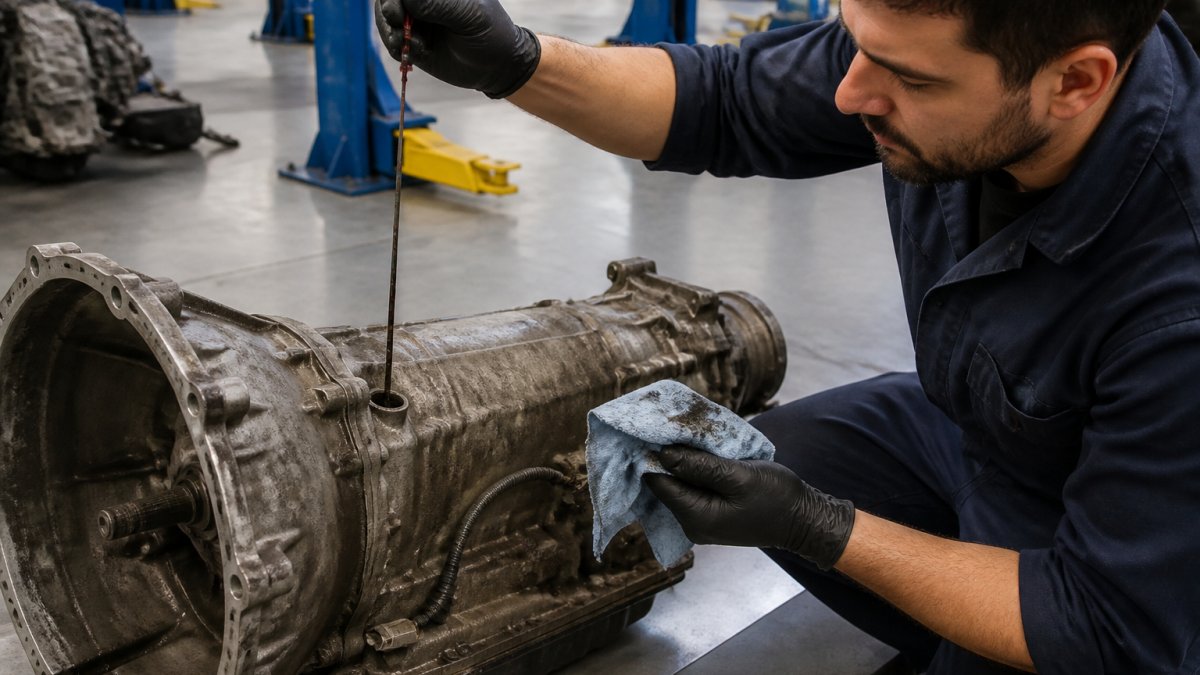
Inspecting Fluid Level and Condition
Start with fluid. Remove the transmission dipstick and check the level. Fluid should reach the "full" mark on the stick.
Examine the fluid color and smell. Fresh transmission fluid is red or pink. Dark red or brown fluid indicates age and heat exposure.
Wipe the dipstick on a clean white cloth. Look for metal particles or debris. Small amounts of fine metal dust are normal wear. Large particles or chunks indicate internal damage.
Fluid condition tells the story of how the transmission was used. Clean, red fluid suggests light use and proper maintenance. Dark, burnt-smelling fluid signals hard use and potential internal wear.
Checking for Leaks and External Damage
Inspect the entire transmission case for cracks, dents, or leaks. Look underneath for fluid stains or drips. A transmission with active leaks will fail quickly after installation.
ATP Automotive Automatic Transmission Control Solenoids, Replacement, Lexus →
Check all seals and gasket surfaces. Dried fluid residue is common, but active weeping indicates seal failure.
Examine the transmission pan (the removable bottom section). Remove it if possible and inspect the interior. Debris, metal particles, or sludge indicate internal wear. A clean pan suggests proper maintenance.
Feel for cracks by running your hand along the case. Even small cracks can lead to leaks under pressure. The transmission case is aluminum on most Toyota units, it's durable but not indestructible.
Road Test and Diagnostic Scan Evaluation
A road test reveals real-world performance. Start the engine and let it idle. The transmission should engage smoothly when shifting from Park to Drive.
Accelerate gently. The transmission should shift smoothly through gears. Feel for harshness, slipping, or hesitation. Drive at highway speeds and listen for unusual noises.
Test all gear positions: Drive, Reverse, and Low (if equipped). Each should engage promptly and hold power delivery steadily.
If possible, have a professional run a diagnostic scan. Modern Toyota transmissions have onboard computers that log trouble codes.
Verifying Service Records and Repair History
Service history matters. A transmission that's been regularly serviced is likely in better condition than one with no documented maintenance.
Ask for records showing fluid changes, filter replacements, and any repairs. Regular fluid changes extend transmission life significantly.
Look for records of previous repairs. If the transmission has been rebuilt or had internal components replaced, ask for documentation.
Check the vehicle's maintenance history if available. A well-maintained vehicle usually has a well-maintained transmission.
If the transmission came from a salvage yard, ask how long the donor vehicle sat before removal. Transmissions that sit unused for years can develop internal corrosion and seal degradation.
Key Questions to Ask When Buying a Used Transmission
Before you buy, ask the seller these specific questions.
How many miles was the original vehicle driven? High-mileage transmissions are worn transmissions.
Was the transmission ever serviced or rebuilt? A transmission that's been professionally rebuilt has known internal condition.
Has the transmission been tested or bench-run? Reputable sellers test units before selling.
What's the warranty or return policy? If the seller offers no warranty or won't allow returns, reconsider the purchase.
Can you provide the complete transmission history? Honest sellers have documentation.
Is this a salvage, rebuilt, or used original? Each category carries different expectations. A rebuilt unit should perform like new.
Making Your Purchase Decision at Bayou Garage Supply
You've inspected the transmission. You've asked the right questions. Now you need to decide: buy or pass.
Here's the reality: a used transmission is a calculated risk. Even the best-looking unit can fail. The goal is to minimize that risk by verifying quality before purchase.
At Bayou Garage Supply, we help buyers verify used Toyota transmission quality and navigate this decision.
When you're ready to verify your transmission choice or explore compatible parts, how to confirm Toyota part fitment walks you through the verification process step by step. If you're comparing the costs of used versus remanufactured options, our guide on used vs remanufactured Toyota engine cost covers the financial and reliability trade-offs.
Your next step: If you've found a used transmission that passes inspection, confirm compatibility with your vehicle VIN before purchasing.
A used transmission can save you thousands compared to a new unit. According to Toyota's vehicle maintenance guidelines, proper transmission inspection is part of responsible used-vehicle purchasing. The National Automobile Dealers Association guidance on used parts emphasizes the importance of pre-purchase verification.
| Inspection Step | What to Check | What Passes | What Fails |
|---|---|---|---|
| Fluid Level | Dipstick reading | Reaches full mark | Below minimum line |
| Fluid Color | Visual inspection | Red or pink | Dark brown or black |
| Fluid Smell | Odor test | Normal or slightly sweet | Burnt or acrid |
| External Case | Visual and touch | No cracks or leaks | Visible cracks or active leaks |
| Seals | Inspection of gaskets | Dry, no residue | Weeping or fluid drips |
| Gear Engagement | Road test | Smooth, prompt shifts | Delayed, harsh, or slipping |
| Trouble Codes | Diagnostic scan | None present | Codes related to solenoids or pressure |
| Service Records | Documentation review | Regular maintenance logged | No records or gaps in service |
Frequently Asked Questions
How can I tell if a used transmission is good?
Check transmission fluid color and smell, it should be bright red or pink, not dark brown or burnt-smelling. Verify the transmission shifts smoothly without hesitation, slipping, or harsh engagement. Look for external leaks around the pan and case. Run a diagnostic scan to check for trouble codes. Review service records to confirm regular maintenance. A used transmission in good condition will have no warning lights, smooth operation at all RPMs, and a clean bill of health from a professional inspection.
What should I inspect on a used Toyota transmission before buying it?
Start with the transmission ID tag to confirm compatibility with your vehicle model and year. Inspect fluid level and condition, low or discolored fluid signals potential problems. Check for leaks under the transmission case and pan. Listen for unusual noises or vibration during a test drive at steady speed and during gear shifts. Verify the transmission engages smoothly in Drive, Reverse, and Neutral without delay. Have a mechanic run a diagnostic scan to read any trouble codes. Request complete service and repair records to confirm the transmission's history and any prior work.
How do I identify my Toyota transmission?
Locate the transmission ID tag, typically bolted to the transmission case or pan. The tag displays a part code and identification number unique to your transmission type. Cross-reference this code with your vehicle's year, model, engine size, and whether it's automatic, CVT, or manual. Toyota model-specific differences are significant, a 2010 Tacoma with a 3.4L V6 uses a different automatic transmission than a 2010 Tacoma with a 2.7L four-cylinder. Consult your vehicle's service manual or contact a Toyota dealer with your VIN to confirm exact transmission specifications before purchasing a used unit.
What warranty or guarantee should I expect with a used Toyota transmission?
Used transmissions typically carry limited warranties ranging from 30 to 90 days, though some suppliers offer longer coverage. Always confirm the return and warranty policy before buying. Request documentation of any prior repairs or rebuilds, as remanufactured transmissions may carry different warranty terms than core units. Verify the seller's return process and timeframe in case the transmission fails shortly after installation. Professional installation and a pre-purchase diagnostic can help reduce the risk of post-purchase failure.
