

Last Updated: October 23, 2026
Quick Summary
To confirm Toyota part fitment, locate your Vehicle Identification Number, find the correct part number for your vehicle using an official Toyota parts catalog, and verify compatibility by filtering results for your specific trim level, engine type, drivetrain, and build date. Always cross-check your part number against your VIN to ensure it matches your exact vehicle configuration.
- Your VIN is located on the lower left of your windshield or driver's side door jamb and contains 17 characters that encode your vehicle's configuration.
- The 10th position of your VIN shows your model year, which is critical because different years have different parts.
- Toyota sometimes changes parts mid-year, so check your vehicle's build date on the driver's side door jamb sticker to verify the part fits your production range.
- Always check for superseded part numbers before ordering, as older numbers may be out of stock or replaced by newer versions.
- Contact a Toyota dealership parts department for free if you're uncertain about fitment after checking official catalogs.
Table of Contents
- Why Confirming Toyota Part Fitment Matters Before You Buy
- Step 1: Locate Your Vehicle Identification Number and Gather Vehicle Details
- Step 2: How to Find a Toyota Part Number for Your Specific Vehicle
- Step 3: Toyota VIN Parts Lookup and Catalog Verification
- Step 4: Verify Toyota Parts Compatibility by Year, Make, and Model
- Step 5: How to Verify Toyota OEM Parts and Check for Superseded Numbers
- Step 6: What to Do When Catalog Results Disagree or Fitment Is Unclear
- Common Mistakes to Avoid When Confirming Toyota Part Fitment
- Frequently Asked Questions
Why Confirming Toyota Part Fitment Matters Before You Buy
Getting the wrong part wastes time and money. A part that looks right on paper might not fit your specific Toyota model, trim level, or engine type. Success comes down to one thing: verifying fitment before ordering.
When you confirm Toyota part fitment correctly, you avoid returns, restocking fees, and delays.
This guide shows you how to use your Vehicle Identification Number, cross-check part numbers, and verify compatibility across model year, trim level, engine type, and drivetrain.
Step 1: Locate Your Vehicle Identification Number and Gather Vehicle Details
Your VIN is your vehicle's fingerprint. Every Toyota has one, and it contains critical information about your specific vehicle's configuration.
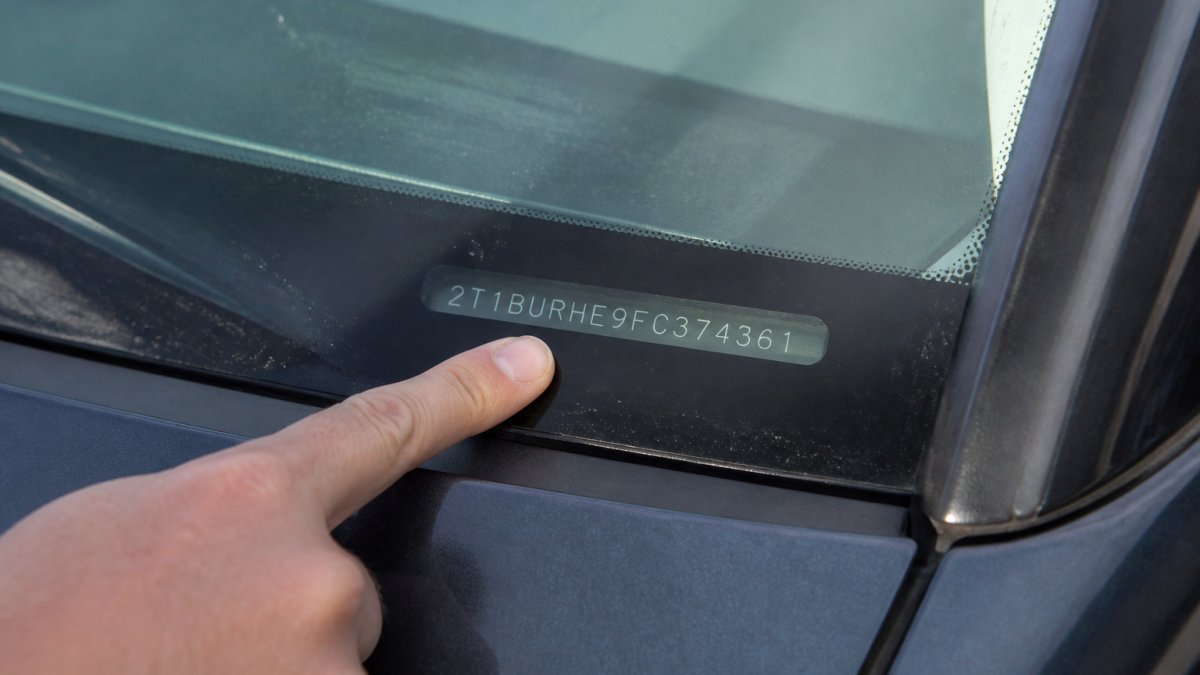
Where to Find Your VIN
The easiest place to find your VIN is the lower left corner of your windshield, viewed from outside. You'll see a 17-character code stamped or etched into the glass.
If you can't read it from outside, check the driver's side door jamb where the door latches. You'll also find it on your registration, insurance card, and title documents.
Write down all 17 characters exactly as they appear. Even one wrong digit will throw off your fitment verification.
Record Your Model Year, Trim Level, and Engine Type
While you're gathering information, write down three more details about your Toyota:
Model Year: This appears in the 10th position of your VIN. The year code changes annually, so it's crucial for fitment.
Trim Level: Check your title, registration, or owner's manual. Common Toyota trims include LE, XLE, Limited, and TRD. Higher trims may have different suspension, electrical systems, or body components.
Engine Type: Check the engine cover or owner's manual. Note the displacement (like 2.5L, 3.5L) and whether it's naturally aspirated, turbocharged, or hybrid.
| Information | Where to Find | Why It Matters |
|---|---|---|
| VIN | Windshield lower left or door jamb | Encodes model year, engine, trim, market |
| Model Year | VIN position 10 | Different years have different parts |
| Trim Level | Title, registration, door jamb sticker | Affects suspension, electrical, body parts |
| Engine Type | Hood cover or owner's manual | Determines engine bay compatibility |
Step 2: How to Find a Toyota Part Number for Your Specific Vehicle
Before you can verify fitment, you need the correct part number for your vehicle. This is where many people get stuck.
Using the Owner's Manual and Parts Diagram
Your owner's manual contains parts diagrams and part number references for common replacement items like filters, bulbs, and belts.
Open the maintenance section and find the parts diagram for what you're replacing. Write the part number down exactly.
If your manual is lost, Toyota publishes owner's manuals online for free.
For more complex parts like suspension components, transmission parts, or engine internals, the owner's manual might not have enough detail.
Checking the Toyota Parts Catalog Online
Toyota maintains an official parts catalog. It's a source for Toyota part numbers.
Enter your VIN in the search box. The system pulls up parts designed for your specific vehicle configuration.
Browse the part category you need. The official Toyota part number shown is what you'll use to verify fitment everywhere else.
Write down the complete part number. It typically looks like this: 90919-02253 (oil filter) or 16100-28050 (engine block). Some part numbers are longer. Get every digit correct.

Step 3: Toyota VIN Parts Lookup and Catalog Verification
Now you have your VIN and your part number. The next step is to verify that this part number actually matches your specific vehicle configuration.
Entering Your VIN Into the OEM Catalog
Enter your complete VIN into a parts catalog. The system decodes it and shows exactly which parts are factory-installed on your vehicle.
Navigate to the part category for what you're replacing. Your part number should appear in the compatible parts list.
If your part number doesn't appear, don't order it.
If your part number does appear, note the price and availability. Then move to the next verification step.
Checking for Mid-Year Production Changes
Toyota sometimes changes parts mid-year: a part standard in January might differ by July.
Parts listings often show production ranges, for example: "Fits 2024 Toyota 4Runner from January 2024 to June 2024." If your vehicle was built outside this range, the part might not fit.
Check your build date on the driver's side door jamb sticker. It shows the month and year your vehicle was manufactured.
If your build date falls outside the production range listed for the part, you may need a different part number.
Step 4: Verify Toyota Parts Compatibility by Year, Make, and Model
Part numbers alone don't tell the whole story. You need to verify that the part actually fits your vehicle's specific configuration.
Matching Trim Level and Engine Configuration
Different trims have different parts.
Factory Racing Parts Oil Filter 206492 Compatible With Toyota Camry Corolla →
In a parts catalog, filter results by trim level using the dropdown menu. The catalog shows parts designed for that trim.
Then filter by engine type: select your displacement and whether it's hybrid or conventional.
The part number that remains is the correct one for your exact configuration. If multiple part numbers appear, read the notes carefully. They'll explain the differences.
Confirming Drivetrain and Market-Specific Variations
Drivetrain matters: a part designed for a front-wheel-drive Toyota might not fit an all-wheel-drive model of the same year.
In a parts catalog, look for drivetrain filters. Select your specific drivetrain configuration: FWD, AWD, 4WD, or 2WD.
Toyota also sells vehicles in different markets with slight variations, such as different electrical systems or emissions equipment. A parts catalog can account for this.
Make sure your part number is listed for your market region.
| Configuration Factor | Why It Matters | How to Verify |
|---|---|---|
| Trim Level | Different trims have different parts | Filter by trim in ePartsPlus |
| Engine Type | Engine displacement affects fitment | Select your engine in catalog |
| Drivetrain | FWD vs AWD vs 4WD changes parts | Filter by drivetrain configuration |
| Market | Regional variations exist | Confirm U.S. market designation |
Step 5: How to Verify Toyota OEM Parts and Check for Superseded Numbers
You've found a part number that matches your vehicle. But is it genuine? And has it been superseded by a newer version?
Distinguishing OEM from Aftermarket Parts
OEM (Original Equipment Manufacturer) parts are made by Toyota or approved suppliers. They're designed to exact Toyota specifications. Aftermarket parts are made by third-party manufacturers.
OEM parts carry the Toyota logo and come in Toyota packaging. They typically cost more but carry Toyota's warranty.
When you order from Bayou Garage Supply, we offer both options.
Look at the part number itself. Toyota part numbers follow a specific format. They're typically 8 digits with a hyphen, like 90919-02253.
Cross-Checking Superseded and Interchangeable Part Numbers
Older part numbers sometimes get superseded. Toyota replaces them with improved versions.
In a parts catalog, look for a "superseded by" or "replaced by" note.
Write down both numbers. The new number is what you should order. The old number is useful if you're trying to match an existing part on your vehicle.
Some part numbers are interchangeable. Multiple part numbers work for the same application. A parts catalog will show these as alternatives.
Step 6: What to Do When Catalog Results Disagree or Fitment Is Unclear
Sometimes you'll find conflicting information. One source says a part fits your vehicle. Another says it doesn't.
Start by trusting an official parts catalog first. It's an authoritative source.
If a third-party site contradicts an official parts catalog, go with the official catalog.
If you're still uncertain, contact a Toyota dealership parts department directly.
For used OEM parts, fitment is especially important. Used parts can't be returned as easily as new ones.
Common Mistakes to Avoid When Confirming Toyota Part Fitment
Mistake 2: Ignoring trim level differences. Two Camrys of the same year with different trims might need different parts. Don't assume all 2024 Camrys use the same suspension components. They don't.
Mistake 3: Overlooking mid-year production changes. Toyota changes parts during the model year.
Mistake 6: Skipping the superseded number check. Old part numbers go out of stock.
Mistake 8: Not recording your VIN correctly. One wrong digit changes everything.
The process we've outlined here takes 15 to 20 minutes. It's time well spent.
At Bayou Garage Supply, we stock many used OEM parts for Toyota trucks and SUVs.
Once you've confirmed the right part number, we can help you source it.
Frequently Asked Questions
How do I use my VIN to find the right Toyota part?
Enter your complete VIN into a parts catalog or your seller's fitment tool. The VIN decodes your vehicle's model year, trim level, engine type, and transmission, which the catalog uses to display only compatible parts. Cross-reference the part number returned against your owner's manual or the parts diagram to confirm it matches your specific application. If the catalog returns multiple part numbers, verify the correct one by checking trim level and engine size.
Can the same Toyota part number fit multiple model years?
Yes, but only within specific ranges. A single part number often fits multiple consecutive model years if there were no design changes. However, mid-year production changes, engine upgrades, or trim-level updates can create different part numbers for the same component. Always verify your exact model year, trim, and engine type in the catalog, never assume a part from a different year will fit. When in doubt, compare part numbers directly or contact the seller with your VIN.
What should I do if a seller's fitment information conflicts with my VIN lookup?
Do not proceed with the purchase. Request the seller's documentation showing how they verified fitment for your specific VIN. Cross-check their part number against an official parts catalog using your VIN. If results still conflict, contact Toyota directly or ask a dealership to verify. This protects you from receiving an incompatible part, especially with used OEM components where returns can be difficult. A reliable seller will provide clear fitment verification and resolve discrepancies before you pay.
How can I tell if a Toyota part is genuine OEM or aftermarket?
Genuine OEM parts carry the Toyota logo, original part packaging, and a specific OEM part number printed on the component or label. Aftermarket parts typically use different branding and packaging. When buying used OEM parts, inspect the part for the Toyota logo and verify the part number matches your catalog lookup. Request photos of packaging and labeling from the seller before purchase. Be cautious of parts without clear branding or documentation, counterfeits exist in the used parts market, especially for high-demand components like engines and transmissions.
Confirming Toyota part fitment protects your investment and saves you time. The VIN-based verification process we've outlined works for every part and every Toyota model. Use it consistently, and you'll never order the wrong part again. When you're ready to source OEM parts, Bayou Garage Supply has the inventory and expertise to help you find exactly what your vehicle needs.
