

Table of Contents
- What Transmission Failure Looks Like
- Transmission Slipping Symptoms and What They Mean
- Gear Shifting Problems: Delayed, Hard, and Erratic Changes
- Unusual Noises from Your Transmission
- Transmission Fluid Leak Detection and Inspection
- Used Transmission Inspection Checklist Before Purchase
- Common Used Toyota Transmission Problems and Severity
- What to Do When You Spot Transmission Failure Signs
- Frequently Asked Questions
Last Updated: October 16, 2026
What Transmission Failure Looks Like
Signs of failing used automotive transmission show up predictably: slipping gears, hard shifts, delayed engagement, unusual noises, fluid leaks, and burning smells. Knowing them keeps you safe and saves money.
Transmission repairs often cost thousands.
One symptom alone might mean nothing; multiple together point to real trouble. Here's each major warning sign.
Transmission Slipping Symptoms and What They Mean
Transmission slipping happens when the engine revs higher without the car accelerating, the transmission isn't fully engaging the gears.
You'll notice it during acceleration or on hills, when the engine sounds louder while the vehicle moves slower, drivers call it "hunting" for the right gear.
Causes include worn friction materials, low fluid, damaged clutches, and internal seal failure that starves lubrication.
What to do if you feel slipping:
- Check transmission fluid level immediately
- Note when slipping occurs (cold starts, hills, acceleration)
- Have a mechanic inspect the transmission
Slipping worsens over time; ignore it and the cost jumps from a fluid flush to a full replacement.
Gear Shifting Problems: Delayed, Hard, and Erratic Changes
Hard shifting feels like a rough clunk that jars you in your seat, sometimes with grinding, indicating worn fluid or internal damage.
Erratic shifting means gears change at the wrong times, skip gears, or drop from Drive to Neutral unexpectedly, dangerous and serious.
Common causes of shifting problems:
- Worn transmission fluid that's lost its friction properties
- Low fluid level reducing hydraulic pressure
- Faulty shift solenoids that control gear engagement
Diagnosis requires a road test; cold starts reveal shifting issues more clearly than warm driving.
Unusual Noises from Your Transmission
Grinding happens when gears aren't meshing smoothly, in manuals shifted without fully disengaging the clutch, or automatics with worn internal gears.
Clunking comes from too much play in worn engine mounts, transmission mounts, or internal components.
Buzzing or whining comes from the pump or hydraulic system, a worn pump can't hold pressure, and low fluid causes whining.
Noise location matters:
- Grinding during shifts = internal gear damage
- Clunking when shifting = harsh engagement
- Whining at idle = low fluid or pump wear
Record when noises occur, cold starts, acceleration, or gear changes, to help mechanics diagnose the problem.
Transmission Fluid Leak Detection and Inspection
Check under your vehicle regularly for red or dark brown fluid pooled on the ground.
Leaks most often come from the pan gasket, input and output shaft seals, a cracked torque converter, split cooler lines, or a degraded dipstick tube seal.
How to check for leaks:
- Park on a clean surface overnight
- Look for drips or puddles underneath
- Note the color and smell of any fluid
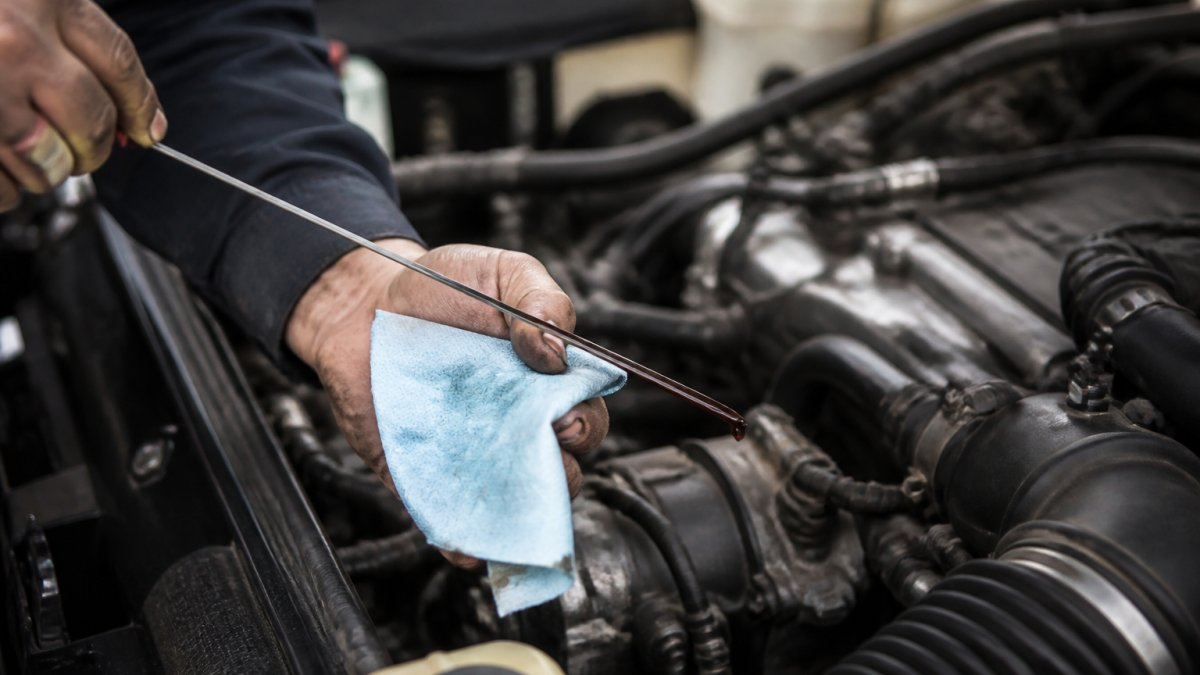
On the dipstick, the level should sit between the minimum and maximum marks with the engine warm and running.
Used Transmission Inspection Checklist Before Purchase
Most symptom articles tell you what a bad transmission feels like, not how to catch one before you pay. This repeatable 30-minute pre-purchase routine needs only a flashlight and a clean paper towel.
Step 1: The Cold Start (Do This First)
Insist the engine be cold when you arrive; a seller who warms it up is hiding the most revealing cold-shift problems.
4L80 Transmission Parts - 4L80SH →
- Start the engine and idle for 60 seconds, listening for whining or buzzing from the bellhousing.
- With your foot on the brake, move the shifter through every position: P, R, N, D, and each manual gear. Each should engage firmly within about one second.
- A long pause before Drive or Reverse, or a violent jolt, is a red flag. A slight cold thump is common and usually not fatal.
Step 2: The Fluid Check
- With the engine warm and running, pull the dipstick, wipe it, reinsert, and read the level.
- Color: fresh fluid is red or reddish-brown; dark brown or black is burnt, and an acrid smell means overheating.
- Texture: rub a drop between your fingers. Grit, metal flakes, or sparkle under a flashlight mean internal wear, walk away.
Step 3: The Test Drive (Minimum 15 Minutes)
A parking-lot loop won't reveal transmission problems; you need cold, stop-and-go, and highway driving.
- Cold phase: Drive gently for two minutes, noting hesitation, flare (revs rising without acceleration), or delayed engagement.
- Stop-and-go: Count the shifts; each should be smooth and predictable. Harsh engagement, a clunk, or a slip is a problem.
- Acceleration: From about 20 mph, roll into the throttle firmly. The transmission should downshift cleanly and the car should pull. Revs climbing without speed gain means slipping.
Step 4: The Parked Checks
- Park on clean pavement, let the car sit 5-10 minutes with the engine off, and look under the bellhousing and tailshaft for red or brown drips.
- Check the cooler lines to the radiator for weeping fittings or cracked rubber.
- If a check-engine light is on, scan it or bring a code reader. P0700-series transmission codes are a direct flag.
Step 5: The Paper Trail
- Ask for service records, specifically transmission fluid and filter service. Most automatics benefit from a fluid service every 30,000-60,000 miles.
- Ask directly: "Has the transmission ever been replaced or rebuilt?" A documented rebuild with a warranty can be a plus; an undisclosed one is a negotiating point at best.
- Ask: "Has the car ever been used for towing?" Towing stresses a transmission far more than normal driving.
Questions to Ask the Seller
- How long have you owned it, and how many miles did you put on it?
- Has the transmission fluid ever been changed, and do you have the receipt?
- Has the check-engine light ever come on?
When to Walk Away
- Burnt-smelling or black fluid
- Metal flakes or grit in the fluid
- Slipping under acceleration on the test drive
If any show up, negotiate the price down enough to cover a rebuild or replacement, or walk. A rebuild commonly runs $1,500-$3,500 and a replacement $3,000-$6,000, so a "small" undisclosed problem is rarely small.
Common Used Toyota Transmission Problems and Severity
Toyota transmissions are generally reliable, but older vehicles sometimes develop issues after 150,000 miles. Knowing Toyota-specific problems helps you evaluate used Toyotas.
Common Toyota transmission issues:
- A340E and A340F automatics develop shift lag after 120,000 miles
- R150F manual transmissions sometimes grind in reverse
- A750E automatics may slip under load in later model years
Early warning signs matter most. According to Toyota's official maintenance guidelines, regular transmission fluid changes extend transmission life significantly.
Age and mileage predict problems: a 15-year-old Toyota with 200,000 miles needs careful inspection, while a 5-year-old with 80,000 miles is lower risk.
What to Do When You Spot Transmission Failure Signs
Not every symptom means the same thing: some mean pull over now, others mean schedule an appointment this week. Use this triage to decide what to do in the moment.
Tier 1: Stop Driving Now
Pull over safely and do not continue driving if you notice any of these:
- Total loss of drive. The engine revs but the car will not move in any gear, or it drops out of gear and will not re-engage.
- Grinding or metal-on-metal noise that gets worse with speed. Continued driving can turn a rebuildable unit into scrap.
- Heavy smoke or a strong burning smell from under the car. This can indicate overheated fluid or an external fluid fire risk.
If so, put the car in Park (or Neutral if it won't stay in Park), set the parking brake, turn on hazards, and call for a tow. A tow bill is far cheaper than a destroyed transmission.
Tier 2: Drive Cautiously to a Shop Soon
These allow a short drive to a shop, but avoid highways, towing, and hard acceleration:
- Slipping that happens occasionally but the car still moves normally most of the time
- Delayed engagement of Drive or Reverse, especially when cold
- Harsh or clunky shifts that are consistent but not violent
Keep the drive short, speeds low, and go straight to the shop.
Tier 3: Schedule an Inspection This Week
These early warning signs rarely mean imminent failure but should be diagnosed before they worsen:
- A single instance of a strange shift that has not repeated
- A faint whine or hum that changes with speed
- Fluid that looks slightly dark but does not smell burnt
What a Technician Will Actually Do
Expect a diagnostic process, not a single test:
- Fluid check. Level, color, smell, and debris, the fastest, most informative first step.
- Scan for diagnostic trouble codes. Codes stored in the transmission or powertrain control module narrow the problem to a circuit, solenoid, sensor, or internal fault.
- Road test. The technician drives through the conditions you described, watching shift points and torque converter lockup.
- Pressure test. A gauge at a test port measures hydraulic pressure in each gear range; low or erratic pressure points to internal wear or a pump problem.
- Visual inspection on a lift. Leaks, mounts, cooler lines, and pan contents are checked.
Symptoms alone can't confirm a failed transmission: a whine might be an alternator bearing, a shudder an engine misfire, a clunk a worn engine mount or bad CV joint. Diagnosis separates transmission faults from everything that mimics them.
What to Do If the Vehicle Loses Drive
If you are moving when the car loses drive:
- Signal and steer to the shoulder or safest spot. Steering and brakes still work but feel heavier without engine assist.
- Shift to Neutral and coast to a stop.
- Set the parking brake and turn on hazards.
Repair, Rebuild, or Replace
After diagnosis, you generally have three paths:
- Service or minor repair. Fluid and filter service, solenoid, seal, or sensor, cheapest, for external or electronic faults.
- Rebuild. The transmission is removed and internal wear parts replaced. Commonly $1,500-$3,500 and a few days.
- Replace. A used or remanufactured unit is installed. Commonly $3,000-$6,000 depending on the vehicle.
Ask for a written estimate separating parts and labor, and ask what warranty covers the work. A rebuild or replacement without a warranty is a gamble.
ASE (Automotive Service Excellence) certified mechanic locator
Frequently Asked Questions
What are the most common signs of a failing transmission?
The most common signs of a failing transmission include slipping gears (engine revving without acceleration), delayed or hard shifting, grinding or clunking noises, burning smells, shaking or vibration, transmission fluid leaks, and dashboard warning lights like the check engine light. These symptoms often appear together as transmission failure progresses. If you notice any combination of these, have the transmission inspected by a mechanic immediately to prevent complete breakdown.
How can I tell if a used transmission is having problems before I buy it?
Before purchasing a used transmission, request the service history and inspect the unit for fluid leaks, corrosion, or damage. During a test drive, check for smooth shifting, unusual noises, burning smells, and hesitation during acceleration. Listen for grinding or whining sounds. Ask the seller about the transmission's age, mileage, and any prior repairs. Review the vehicle's maintenance records to verify regular fluid changes. If possible, have an independent mechanic perform a pre-purchase inspection to catch hidden problems.
Can low transmission fluid cause transmission failure symptoms?
Yes, low transmission fluid is a common cause of transmission failure symptoms. It reduces hydraulic pressure needed for smooth shifting, causing slipping, delayed shifts, hard shifts, and overheating. Low fluid can also lead to grinding noises and burning smells as internal components wear without proper lubrication. Check your transmission fluid regularly by locating the dipstick under the hood, ensuring it reaches the full mark when the engine is running. Top up if needed, but persistent low fluid indicates a leak that requires professional repair.
Should I repair or replace a failing used transmission?
The decision depends on the transmission's age, mileage, and the specific damage. Minor issues like fluid leaks or worn seals may be repairable for $200-$500. Significant internal damage typically requires replacement, costing $1,500-$3,500 for a used transmission or $3,000-$5,000 for a rebuilt unit. Request a diagnostic from a mechanic to identify the exact problem. For older vehicles with high mileage, replacement often makes more financial sense than repair. Bayou Garage Supply offers quality used OEM transmission parts to support your repair decision.
Transmission problems demand attention. Catching early warning signs saves thousands in repair costs and keeps you safe on the road. Whether you're buying a used vehicle or maintaining the one you own, regular inspection prevents surprises. When you need quality transmission parts for repair or rebuild, Bayou Garage Supply offers reliable OEM components and hardware kits designed to last. Browse our transmission parts selection and get the components your vehicle needs to run smoothly.